Four Cups – and a Better Future
Pesach Message from MWU Dept. of Education
- 30 March, 2026
Dear friends,
We are approaching another Pesach, the Festival of Freedom of the Jewish People. It is always a time for hearts to come together, for family conversations, and for remembering both the distant and the more recent past. This year, however, Pesach will feel heavier than usual. It comes in the shadow of a complex and painful moment for us as a people and as a nation, giving new urgency and deeper meaning to the holiday's messages.
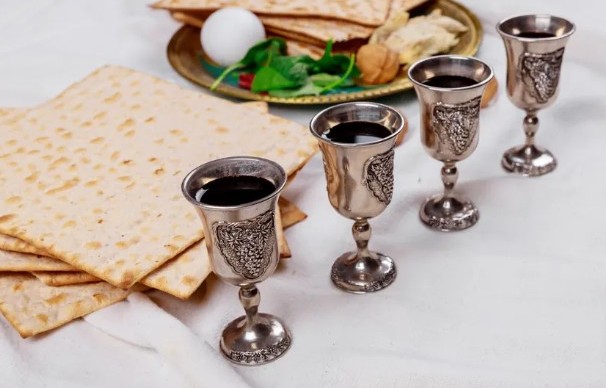
During the Seder[1], we raise and drink four cups of wine, recalling the four expressions of national redemption found in the Book of Shemot: “Therefore say to the children of Israel: I am God; and I will bring you out (והוצאתי) from under the burdens of Egypt; and I will deliver you (והצלתי) from their bondage; and I will redeem you (וגאלתי) with an outstretched arm… and I will take you (ולקחתי) to Me as a people…”[2]
Our sages taught that these four expressions are not simply repetitions, but distinct stages in a single redemptive process[3]. Redemption does not happen all at once; it unfolds gradually. First, one must break free from oppression. Then comes deliverance from immediate danger. After that, the work of transforming reality itself begins. And finally, for redemption to be complete, a person must forge a relationship, identity, and purpose. The Maharal of Prague explains that each of these stages reflects a deeper dimension of freedom: true liberation means not only an end to suffering, but also no longer being a slave in essence.[4]
Today, as a people, we find ourselves in a process that bears similar features. The State of Israel, with significant achievements, is confronting real threats on several fronts: Iran, Hezbollah, and the Houthis. These are facts and outcomes we must not minimize: lives have been saved, dangers have been neutralized, and Israel’s capacity for self-defense has been reaffirmed. In these achievements, we hear echoes of “Vehotzeiti” and “Vehitzalti”: we have emerged from danger and been delivered from immediate threats.
Jewish tradition cautions us against deceiving ourselves into believing that redemption is already complete. In the past, after the Exodus from Egypt, even once the people reached the sea, they still faced the uncertainty of the wilderness and the struggles that awaited them on the road to the Land of Israel. The Midrash makes this point clearly: “They were not redeemed all at once, but in stages”[5].
That is why, in the Seder itself, one cup remains untouched – the cup of the Prophet Elijah, herald of redemption – reminding us that the final redemption is still to come. Perhaps that is also why King David writes: “Many are the afflictions of the righteous, but from all of them God delivers him”[6]. Not once, but again and again, through an ongoing process.
So today, we must be grateful for the progress made in this war, even as we know it is not the end of the journey. Full redemption – “Vehotzeiti” and “Vehitzalti” – still lies ahead as a challenge: not only to survive, important as that is, but also to build a reality of peace, lasting security, moral purpose, and a shared sense of destiny.
Rav Kook wrote that Israel’s redemption is like the dawn: “At first it is faint, barely perceptible… but little by little it grows brighter”[7]. Not everything happens in a single moment, but the light does move forward.
This Pesach, as we raise the four cups, let us see them not only as a memory of the past, but also as a map for the present. Let us take joy in what has already been achieved. Let us give thanks for every act of deliverance. And let us hold fast to both humility and hope, knowing that we are still on a journey: grateful for what we are capable of doing, responsible for what we still must build, and faithful in the belief that we continue to move forward, step by step, toward a better future.
May God bless this gathering of our cherished ones around the Passover Table in loving embrace and meaningful dialogue. And may this Seder and all our future Seders be celebrated in times of liberation and redemption of Our People and of all men and women of good deeds!
Chag Pesach Sameach!
Chazak ve'ematz!
RABBI CARLOS A. TAPIERO
Deputy CEO & Director of Education
Maccabi World Union
[1] The festive Pesach meal, whose ritual includes various symbolic elements alluding to liberation.
[2] Exodus 6:6–7.
[3] Talmud Yerushalmi, Pesachim 10:1.
[4] Gevurot Hashem.
[5] Mechilta deRabbi Ishmael, Beshalach.
[6] Psalms 34:20.
[7] Orot, 5.